
48 HOURS IN EASTERN SICILY
In March you can stand in snow on Europe’s highest active volcano at lunchtime and eat gelato on a Taormina street the same evening. This is the season almost nobody photographs.
Most people see eastern Sicily in August: heat, beaches, a queue for the Greek theatre. Come in March instead and the island rearranges itself. Etna is white to its shoulders, the baroque towns are lit for their own people rather than for coaches, and the light stays low and warm all day.
This is how I’d spend 48 hours there.
Day one — the volcano, then Taormina after dark
Base yourself in Catania and hire a car — everything in this story is within a couple of hours’ drive. Start early and drive up Etna from the Nicolosi side. From the road the mountain looks like a postcard: a white cone above black lava fields and scrub. Higher up it stops being scenery. The snow sits on dark ash, the older craters rise out of it like smaller mountains, and on a clear day the sky above them is a deep, almost unreal blue. From Rifugio Sapienza take the cable car, and in winter carry on by snowcat to around 3,000 metres — book the tour in advance on the cable-car operator’s website. Dress for proper winter, and give it the whole morning.


Come down through Zafferana Etnea in the afternoon, when the cloud usually rolls in over the slopes, and keep going to Taormina for the evening.
Taormina is a town of stairs. Walk up through the stepped lanes lined with banana plants and flowering trees, look into the small churches along the Corso, and buy a gelato — in March you will not queue for it. At dusk the view from the top of the town runs all the way down the coast. After dark the Piazza IX Aprile, with its black-and-white paving, and the baroque fountain on Piazza Duomo belong to the people who live there.


Don’t skip: Savoca
End the day twenty minutes up the hill from the coast, in Savoca. The village is tiny, and at night almost empty — and on its little square is Bar Vitelli, the café where Michael Corleone first meets Apollonia’s father in The Godfather. We had our drink there after dark, under a single lamp and a bare vine: stone arch, the old painted sign, not another tourist in sight. In summer there is a queue for this table. In March it was ours.

Day two — Syracuse and Ortigia
Spend the morning in the Neapolis archaeological park. The Greek Theatre is cut straight into the hillside, and the old limestone quarries beside it are the real surprise: caves and walls of pale rock, big enough to walk into, green with moss after the winter rain.
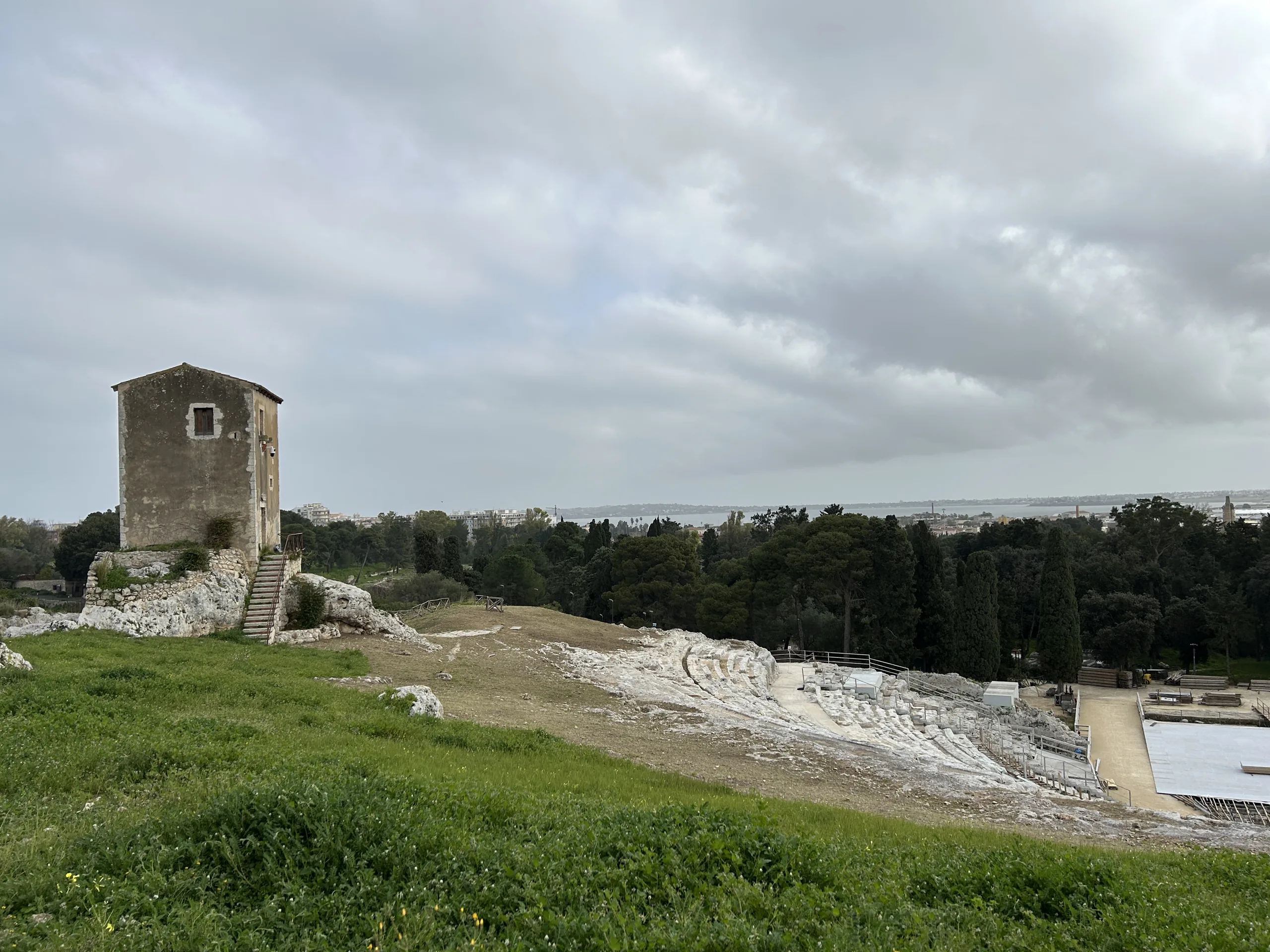
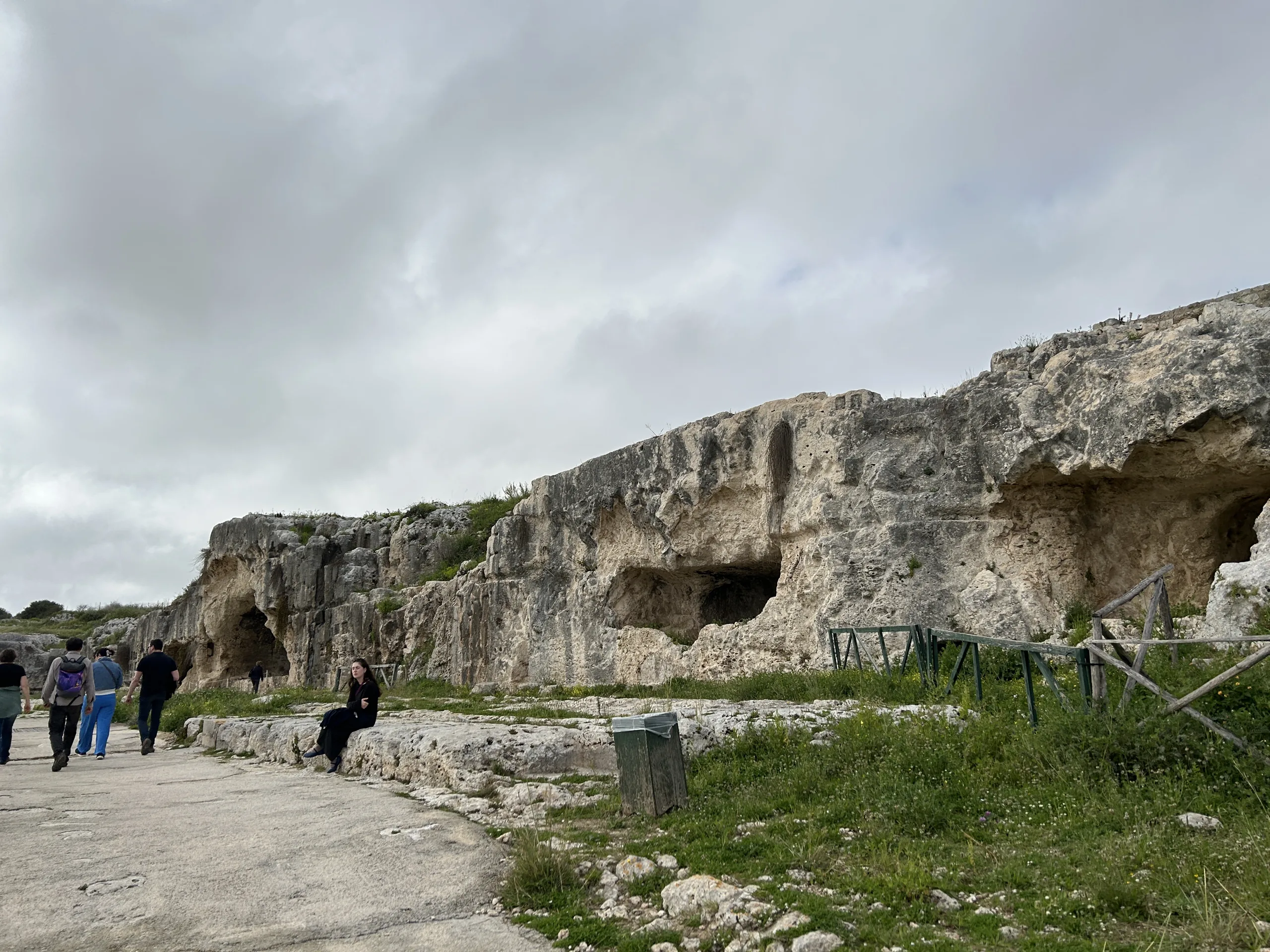
In the afternoon cross the bridge to Ortigia, the island that is Syracuse’s old town. The ruins of the Temple of Apollo sit in the middle of the traffic as if nothing happened in between. Then get lost on purpose: narrow lanes of honey-coloured stone, a fountain of Diana on Piazza Archimede, and the harbour at night, when the whole waterfront is reflected in black water.

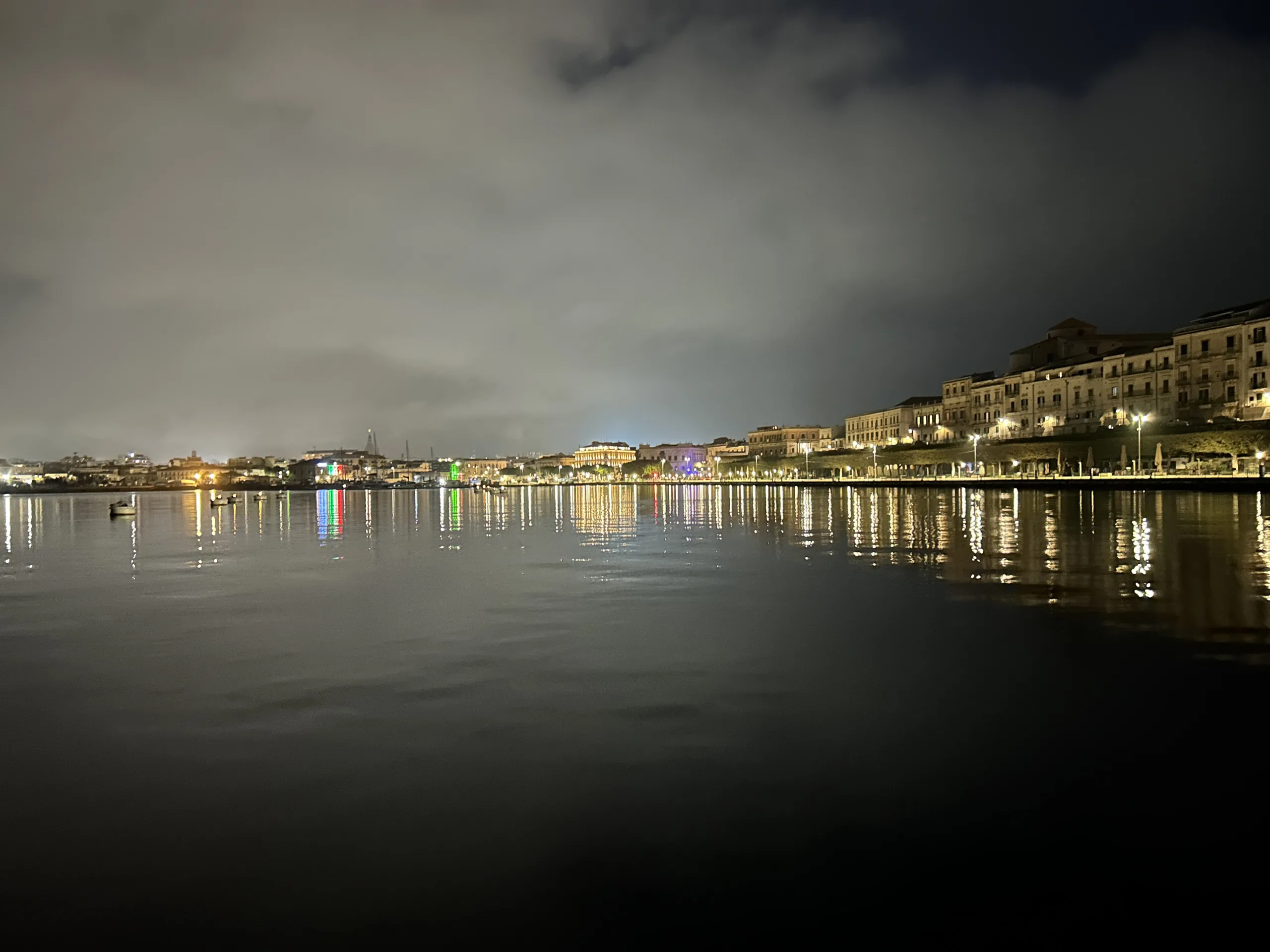

Day three — Catania, before you leave
Catania is built from Etna itself — dark lava stone under white baroque. Start at Castello Ursino, the medieval castle whose moat is now a green ditch at the foot of its walls, then walk to the Piazza del Duomo and step inside the Cathedral of Sant’Agata for the painted apse and the marble floor. The side streets around the market are strung with umbrellas and full of small bars.


If you have an hour more, the monumental cemetery on the edge of the city is one of the most unexpected places on the island: streets of family chapels in every style the nineteenth century could imagine, silent and entirely yours on a weekday morning.


The practical part
- When to go: March and early April for snow on Etna and empty towns; late autumn for the same quiet with a warmer sea. Summer is hot and crowded.
- Getting there: fly into Catania and hire a car; with Catania as your base, the volcano, Taormina, Savoca and Syracuse are all easy day trips.
- Etna in winter: cable car from Rifugio Sapienza, then the snowcat tour to about 3,000 m — book ahead on the operator’s site; it depends on the weather.
- The light: clear mornings on Etna (the cloud often builds by early afternoon); dusk and after dark in Taormina and Ortigia.
- Dress: winter clothes for the volcano, a light jacket for the coast — on the same day.
- Where we stayed: Catania, as a base for the whole trip.
Photography from March 2025. See the full Sicily gallery →
Want your property inside a story like this?
A feature story, 20 photos and 3 Reels — from two nights on location.