
48 HOURS IN VENICE
Most people photograph Venice in July. The story worth telling is the one they miss — the city in February, and the rooms behind the doors.
Everyone arrives with the same picture of Venice already in their head: a gondola, a bridge, a crowd. It is accurate, and it is the least interesting thing about the place. Come in February, or stay long enough in summer to be out before the day-trippers and back after they leave, and the city turns out to be mostly interiors — courtyards, staircases, painted ceilings, small rooms papered floor to ceiling — with water running between them.
This is how I’d spend 48 hours there.
Day one — arrive, and go straight to the square
If you are here for Carnival, the most extraordinary costumes are on St Mark’s Square in the morning, when the light is low and the crowd has not yet filled in. The people inside them are not performers; they have spent months on the silk, the feathers and the masks, and they come to stand in front of the basilica and be looked at. Walk slowly. Nobody minds a camera, but everybody minds being rushed.


In summer the same square is a different place by nine o’clock. Be there before it, or leave it to the evening.
After dark, take the long way back along the Grand Canal. The palaces are lit from inside, the water is black, and the city finally goes quiet enough to hear the boats.

Day two — the Venice behind the doors
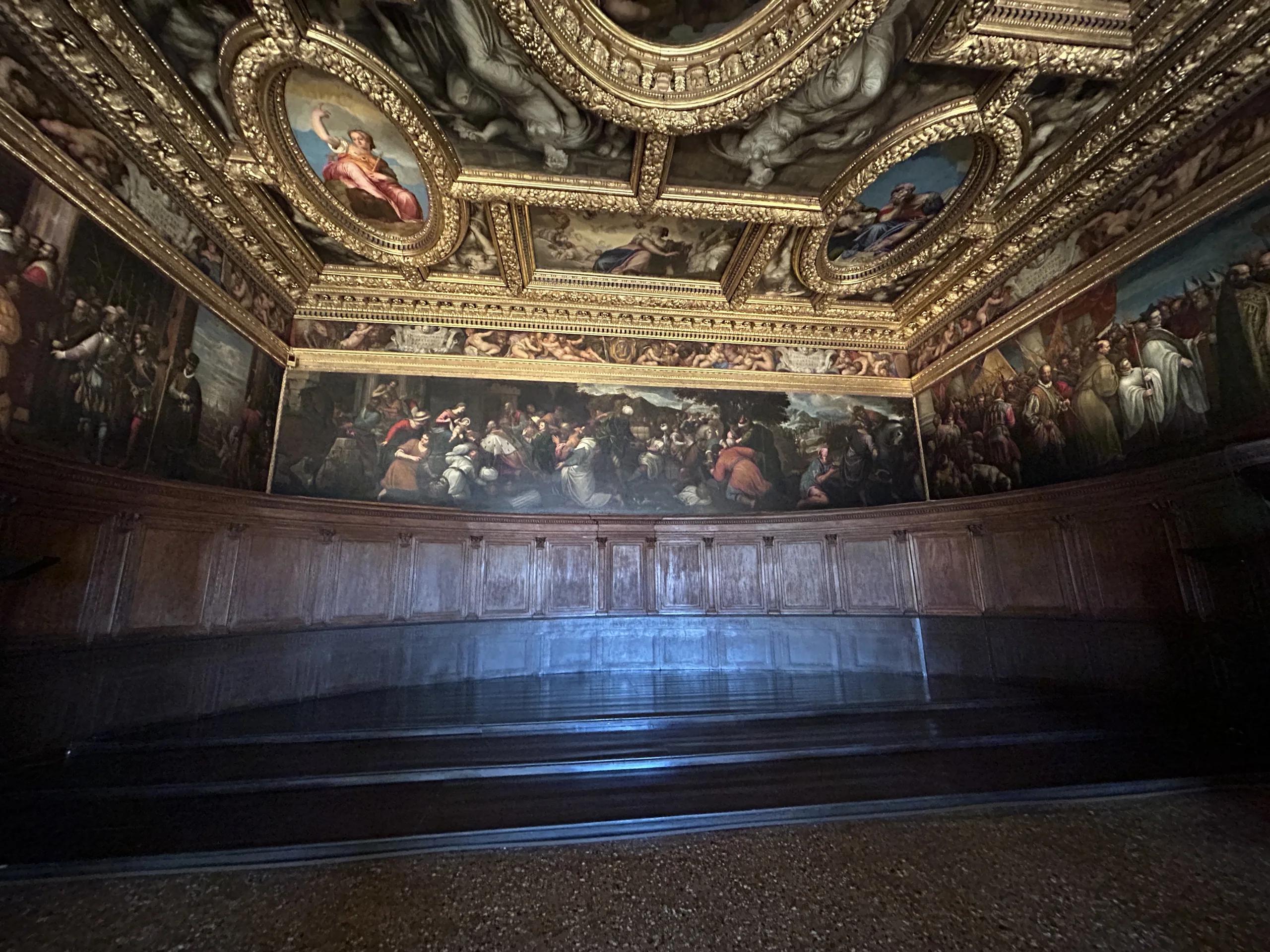
Venice keeps its best rooms indoors. Start at the Doge’s Palace, and look up: the ceilings are the point, gilded frames around paintings the size of a tennis court. Then cross to the Frari, where the monuments are stranger than anything on a postcard — a marble pyramid with a dark doorway cut into it, and a doge’s tomb where skeletons hold up the inscription.


If you can get a ticket, spend the evening at La Fenice. Even from the cheapest box, the room is the performance: tier upon tier of gilded boxes, rebuilt detail by detail after the fire of 1996.

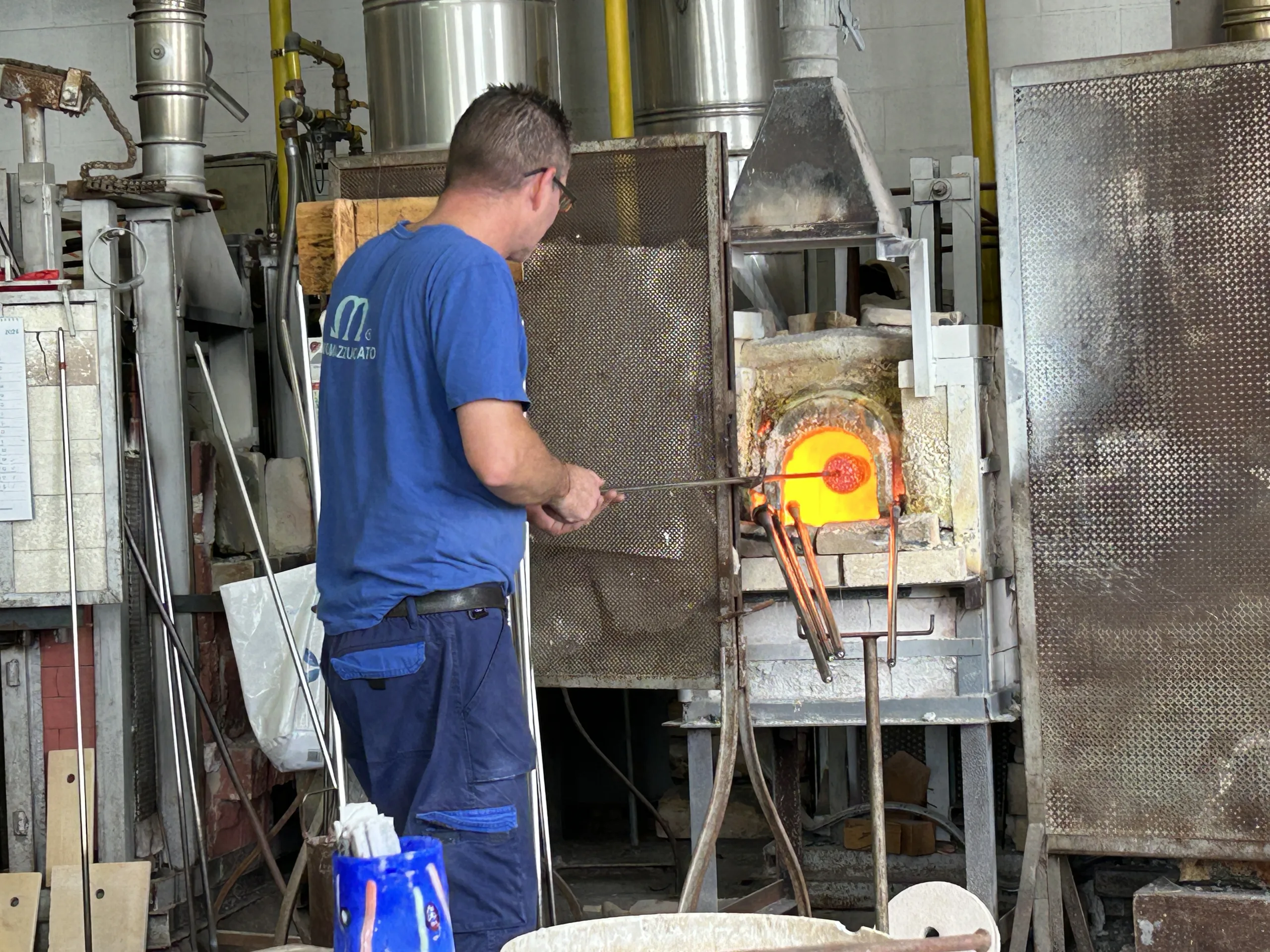
In the afternoon, take the vaporetto out onto the lagoon. San Giorgio Maggiore sits alone on its island across the water from St Mark’s, and on Murano the glass furnaces are still working. A single piece carried home in newspaper is the only souvenir worth the weight.
Day three — breakfast, and leave slowly
Have breakfast in the room if the house offers it: coffee, orange juice and pastries on a tray, with the shutters open onto a canal. It is the most Venetian hour of the day, and nobody else is awake to share it. Then one last walk through the back streets of Castello or San Marco before the trains.


The practical part
- When to go: February for Carnival (the dates move every year — check before you book); late spring or autumn for the city without it. Summer works if you live on the edges of the day.
- Getting there: by train to Santa Lucia or by air to Marco Polo, then vaporetto. There are no cars in the city, and you will not miss them.
- The light: mornings on St Mark’s Square; after dark along the Grand Canal; interiors whenever it rains.
- Where we stayed: La Veneziana Boutique Rooms in Castello, and Residenza La Loggia near St Mark’s.
Photography from three visits: July 2024, February 2025 and February 2026. See the full Venice gallery →
Want your property inside a story like this?
A feature story, 20 photos and 3 Reels — from two nights on location.